
How Does Acupuncture Work?
Ancient wisdom. Modern understanding. A path to lasting healing.
The Foundation
What Is Acupuncture?
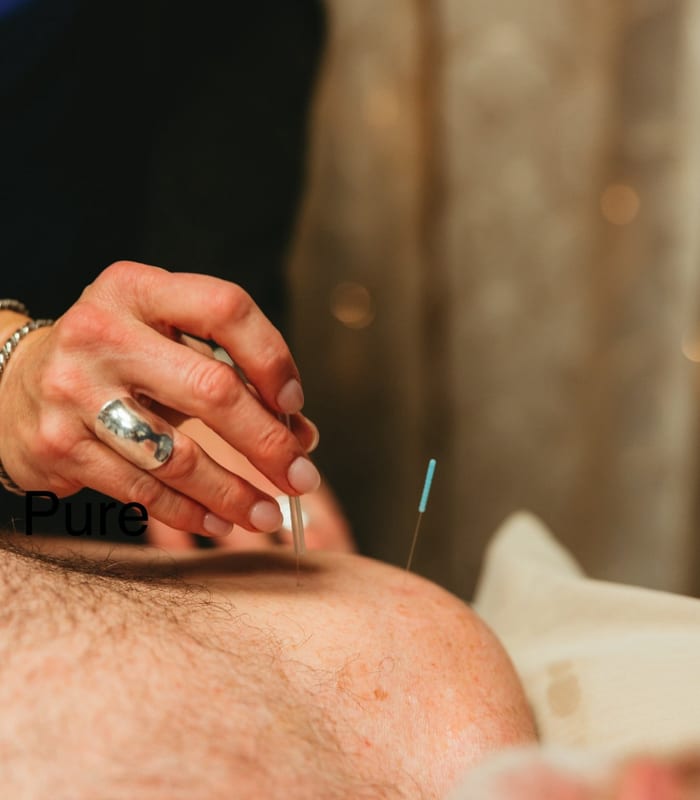
Acupuncture is one of the oldest and most widely practiced forms of medicine in the world, with roots stretching back over 3,000 years in Traditional Chinese Medicine (TCM). It involves the precise insertion of ultra-fine, sterile needles into specific points on the body to restore balance, relieve pain, and promote the body's innate capacity to heal.
At Pure Holistic Health Clinic, we draw from multiple lineages — Chinese, Japanese, Korean, and Dr. Tan's Balance Method — to deliver highly individualized care that addresses the root cause of your condition, not just the symptoms.
Modern research has confirmed what practitioners have known for millennia: acupuncture stimulates the nervous system, modulates inflammation, regulates hormones, and activates the body's natural pain-relief pathways.
The Science & Philosophy
Meridians, Qi & the Body's Energy Network
In TCM, health is understood as the harmonious flow of Qi (pronounced "chee") — the vital life force — through a network of pathways called meridians. When Qi flows freely, the body is in balance and health is maintained. When Qi becomes blocked, deficient, or excessive, pain and illness arise.
Qi — Vital Energy
Qi animates all living things. It flows through 12 primary meridians, each connected to a major organ system. Acupuncture points along these meridians serve as gateways to regulate Qi flow throughout the body.
Yin & Yang Balance
Health requires balance between opposing forces — Yin (cool, nourishing, restorative) and Yang (warm, active, transformative). Acupuncture restores this equilibrium, addressing both excess and deficiency patterns.
The Western View
Modern science explains acupuncture's effects through neuroscience: needle stimulation triggers the release of endorphins, serotonin, and anti-inflammatory compounds, while modulating the autonomic nervous system and improving circulation.
Your Journey
What to Expect at Pure
Initial Consultation
Your provider conducts a thorough intake — reviewing your health history, current symptoms, lifestyle, and goals. Tongue and pulse diagnosis provide additional insight into your body's internal landscape.
Needle Insertion
Ultra-fine, sterile, single-use needles are placed at carefully selected acupuncture points. Most patients feel little to no discomfort. You rest comfortably for 20–40 minutes while the needles work.
Qi Activation
Once inserted, needles stimulate the flow of Qi (vital energy) along meridian pathways. This activates the body's self-healing mechanisms — reducing inflammation, regulating the nervous system, and restoring balance.
Ongoing Care
Your provider reassesses at each visit, adjusting point selection as your body responds. Herbal medicine, dietary guidance, or adjunct therapies like cupping may be incorporated to accelerate results.
Common Questions
Frequently Asked Questions
Does acupuncture hurt?
Most patients are surprised by how comfortable acupuncture is. The needles used are hair-thin — much finer than a hypodermic needle. You may feel a brief sensation of pressure, warmth, or a mild ache at the insertion point, which typically fades within seconds. Many patients fall asleep during treatment.
How many sessions will I need?
This varies by condition and individual. Acute issues often respond in 3–6 sessions, while chronic conditions may benefit from a longer course of care. After your initial evaluation, your provider will outline a personalized treatment plan with realistic expectations.
Is acupuncture safe?
Yes. When performed by a licensed practitioner using sterile, single-use needles, acupuncture is extremely safe. Side effects are rare and typically minor — occasional light bruising or temporary soreness at needle sites.
What should I do before my appointment?
Eat a light meal 1–2 hours before your session. Wear loose, comfortable clothing. Avoid alcohol and strenuous exercise on the day of treatment. Bring a list of any medications or supplements you are taking.
Can acupuncture be combined with conventional medicine?
Absolutely. Acupuncture is an excellent complement to conventional medical care. Many patients use it alongside physical therapy, medication, or surgery to enhance recovery and manage side effects. Always inform both your acupuncturist and your medical doctor of all treatments you are receiving.
Ready to experience the difference?
Schedule your first appointment at Pure Holistic Health Clinic and take the first step toward whole-person healing.
Contact Us Today